Introduction
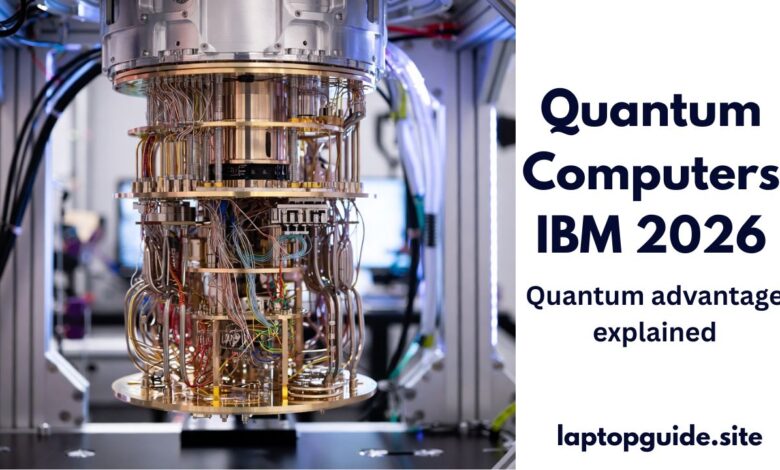
Not long ago, quantum computing sounded like pure science fiction. Today, it is quickly turning into a practical reality. Quantum Computers IBM 2026 represent a critical milestone in IBM’s long-term plan to achieve quantum advantage—a point where quantum machines can solve real-world problems better than classical computers.
IBM’s approach is not about hype. Instead, the company is focused on building stable, scalable, and useful quantum systems. This article explains IBM’s 2026 vision, what quantum advantage really means, and why this moment matters for the future of computing.
What Are Quantum Computers?
Quantum computers operate using qubits, which are fundamentally different from classical bits. While classical computers process information as either 0 or 1, qubits can exist in multiple states at the same time due to superposition and entanglement.
This allows quantum computers to explore many possible solutions simultaneously, making them extremely powerful for specific types of complex problems such as simulations, optimization, and cryptography.
Classical Computers vs Quantum Computers
To better understand the difference, here is a simple comparison:
| Feature | Classical Computers | Quantum Computers |
|---|---|---|
| Basic Unit | Bit (0 or 1) | Qubit (0, 1, or both) |
| Processing Method | Sequential | Parallel |
| Speed for Complex Problems | Limited | Potentially exponential |
| Error Sensitivity | Low | Very high |
| Typical Use | Everyday computing | Advanced scientific problems |
This comparison shows that quantum computers are not meant to replace classical systems but to complement them.
IBM’s Quantum Computing Vision
IBM is one of the few companies that openly shares its quantum roadmap. The company’s strategy focuses on steady, measurable progress rather than unrealistic promises.
IBM’s vision includes:
-
Increasing both the number and quality of qubits
-
Reducing error rates through better design
-
Scaling quantum processors efficiently
-
Providing cloud-based access to quantum systems
This balanced focus on hardware, software, and accessibility sets IBM apart in the quantum race.
Quantum Computers IBM 2026: What to Expect
By 2026, IBM aims to deploy quantum systems capable of handling workloads that move beyond pure experimentation.
Key expectations for 2026 include:
-
Thousands of high-quality qubits
-
Improved coherence and stability
-
Advanced quantum error correction
-
More reliable quantum operations
Together, these improvements are designed to bring IBM closer to achieving practical quantum advantage.
IBM Quantum Systems: Then vs 2026
The progress becomes clearer when we compare earlier systems with IBM’s 2026 goals:
| Aspect | 2022–2024 Systems | IBM Quantum 2026 (Expected) |
|---|---|---|
| Qubit Stability | Moderate | Significantly improved |
| Error Rates | High | Much lower |
| Scalability | Limited | Large-scale systems |
| Use Cases | Experimental | Industry-oriented |
| Reliability | Research-grade | Pre-commercial level |
This shift reflects not just growth in size, but a major improvement in quality and usability.
What Is Quantum Advantage?
Quantum advantage refers to the point at which a quantum computer can solve a meaningful problem faster or more efficiently than the best classical computer available.
Importantly, this does not mean quantum computers will outperform classical machines in every task. Instead, they will excel in specific domains where classical approaches struggle.
IBM’s goal is to achieve quantum advantage in problems that deliver real value, not just theoretical demonstrations.
How IBM Plans to Achieve Quantum Advantage
IBM’s roadmap toward quantum advantage is built on three core pillars:
1. Hardware Innovation
IBM continues to design next-generation quantum chips with better qubit connectivity and longer coherence times.
2. Error Correction and Mitigation
Quantum systems are extremely sensitive to noise. IBM’s research in error correction is essential for producing reliable and repeatable results.
3. Software and Ecosystem Development
Through platforms like Qiskit, IBM enables developers and researchers to experiment with quantum computing using cloud-based tools.
This integrated approach increases the chances of real-world success.
Real-World Applications of IBM Quantum Computers
Once Quantum Computers IBM 2026 reach quantum advantage, multiple industries could benefit:
| Industry | Potential Impact |
|---|---|
| Healthcare | Faster drug discovery and simulations |
| Finance | Portfolio optimization and risk analysis |
| Logistics | Route and supply chain optimization |
| Materials Science | Discovery of new materials |
| Cybersecurity | Research in post-quantum cryptography |
The value lies not only in speed but in better decision-making.
Challenges That Remain
Despite strong progress, quantum computing still faces challenges:
-
High sensitivity to environmental noise
-
Expensive infrastructure
-
Limited availability of skilled professionals
However, IBM’s steady investment and transparent roadmap suggest these challenges are being addressed step by step.
Beyond 2026: The Bigger Picture
IBM does not view 2026 as the final destination. Instead, it represents a foundation for future fault-tolerant quantum systems.
In the long run, hybrid models that combine classical computing, quantum computing, and artificial intelligence are expected to become the norm.
Conclusion
Quantum Computers IBM 2026 mark a crucial step toward practical quantum advantage. With improvements in hardware, error correction, and software ecosystems, IBM is positioning itself as a leader in the next era of computing.
While challenges remain, the progress toward 2026 suggests that quantum computing is moving from theory to real-world impact—making this a defining moment in the evolution of technology.